Saturday, March 31, 2007

Finally a light at the end of the headache inducing tunnel


Although a highly pleasant (following recent restoration) place, Wollongong Library gets a little tiresome on a lovely Saturday afternoon. There are only so many articles about freak deaths in the South Coast Shipping industry you can read about before it all starts to look like this.....

Finally, i have stumbled bleary eyed across an article entitled 'Loading Pig Iron', and some useful background information about Fred Wong's activities down south.

This is one of a few pages from the Illawarra Mercury and ..shock horror the Sydney Morning Herald detailing the industrial unrest at Port Kembla, of which our Freddy was a part at the grand old age of 32.


Our Freddy at the 'most significant political demonstration to ever take place in Illawarra.


As i already know Fred Wong was a politically active member of the NSW Chinese community, and along with other 'wharfies' protested the sale of pig iron to Japan at the Port 'Kembla Picket'.


This information takes our subject out of the mass of information surrounding his Sydney based activities into the clearer world of regional events. My first thought was; The Illawarra Mercury!, it must have some articles on the protests at Port Kembla so that i can find out a bit more about it. ......So off to Wollongong City Library i go.


Well this is my first experience of using microfilm, and unbeknown to me you can't wonder up tot he library with no real idea of the date of the event you are looking for and expect it to pop up on the screen. In fact the Librarian had a good giggle when she realised that i didn't actually know which month this so called picket happened in (well all the books just gave a year!). After some further research, however i made an informed guess that as the picket started in 1938 and the 'wharfies' were back to work in 1939, it must have taken place in December of 1938.


So here i go ploughing through 'News from England'....'Women's column' and 'Dapto doings' to find some relevant information.

Wednesday, March 28, 2007

The Port Kembla Wharfie Boys:

Microfilm is all very well, but there is a lot of it. I need an exact date for when Freddy was involved inthe pickets at Port Kembla otherwise i will be scrolling for hour.....so here goes nothing:

Waterside worker research led me to the Australian Trade Unions Archive , which in turn had some historical links to Workers Online ,which led me to a historical article:

The Australian Trade Unions Archive Timeline is the most useful item as it states:

1938:
At Port Kembla, Waterside Workers' Federation members refuse to load scrap iron for shipment to Japan. The "Dog Collar Act" is applied to break the strike. In response to this and the laying off of men by BHP, loading is eventually resumed in 1939. (Freddy was heavily involved in this)....


ok This is going to take a while........

One more find: an article about Asiatic Immigration relating to the Chinese Seaman's Union
HUGE BIG QUESTIONS TO BE ANSWERED!!!

There are a few bits of information about Freddy available through the Chinese Heritage Foundation which raise a series of new questions:

1 : Freddy had a Chinese bride Quan Chong and in 1931, they had one child, a girl called Gee Fong, known as Gow Gun. (this birth and marriage was in China so there will be little information i can access in regard to them, however they may have lived or dies in NSW as well so i should add them to my grave search)

2: Freddy set up a fruit and vegetable shop on Parramatta Road, Homebush. ( I wonder if it is still there, or at least the caveat of the land with his ownership recognised)

3: As mentioned in the last post; Freddy's company registered as Asia Airlines pty ltd; which may have a paper trail to follow.

4: Fred supported the waterside workers' picket at Port Kembla, to halt the export of iron to Japan which the wharfies believed could be used to make military weapons. (This must have made the local papers so i shall try out the mircofilm at Wollongong library and see what i can come up with)

5:Fred was one of the pioneers to assist in the establishment of the Australian branch of the Chinese Seamans' Union. (The CSU may also have made the local newspapers in and around Sydney during the war years)

6: Freddy assisted the establishment of the first performances of Cantonese Opera in Sydney. (This fund raiser for the war effort was featured on the Chinese Historical Display at he National Museum which is mentioned in my first post)

7: He died in an accident on a catalina flying boat at Lake Boga in Victoria. (it would be interesting to see the local papers or police report on this...which will be hard to get as it is national not state)


SO MUCH RESEARCH TO BE DONE!!! AND REALLY NOT ENOUGH TIME!!
Freddy's Business ventures

The Chinese Heritage Foundation say that:

"After the war, Fred was motivated to spearhead a local campaign to support
pro-Indonesian independence, for the plight of the Indonesians suppressed by the
rule of Dutch colonialism. He worked to co-ordinate the despatch of medical aid
to the Indonesians and on the return flight bring back quinine to treat Chinese
seamen who were sick with malaria. For this cause he needed funds and aircraft
to carry medicine and supplies. Fred formed a new business venture, Asia
Airlines Pty. Limited, which had a number of shareholders. Capital of some
₤10,000 was raised and three catalina ‘flying boats' were purchased"

This is pretty dam cool, and i think that i may be able to use the name of this business venture to get more info on Freddy's existence!!!!...oh lots of research to be done. This Company would have had to be registered with the Australian Authorities and there may be records of this...... ok need to think and revert to Lecture notes and my uni text book to find the best way round this one.

I know that the current corporate regulatory bodies only date back to the 80s.....? mmm many questions to be answered

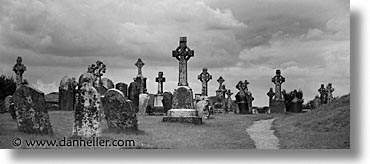
'The City of the Dead'

Well Rookwood cemetery is not only massive, it is complicated. There are five or six different sections which have different contact details and locations....rrrr! As i was not completely sure about the religious background of Freddy I called all of them in the hope that somebody would know where to look. Luckily some one did. I was told by an administration employee from Rookwood's acropolis office that the Anglican Trust (one section of Rookwood) was the most likely final destination of any Chinese Immigrant buried in Sydney before 1950. So i called the Anglican Trust and to my excitement there was a Frederick Kennith Wong buried in July of 1948 in their 3rd Chinese section ....grave number 1387.

Interestingly this was no longer his grave as for reasons unknown he had been exhumed in 1949 and moved round the corner to grave no: 1874-1875.......I wonder why? Hopefully the Grave stone will hold the answer....... to be continued.

Is it wrong that i am really starting to enjoy poking into the settled dust of someones life gone by?, or that i am now looking forward to a visit to a huge cemetery ?....probably

Freddy's Grave


I found a fantastic site called 'Find a Grave' which allows you to hunt international grave locations of anyone....sadly my subject, Freddy, did not come up in the search......so i think i will have to do some actually research.


I already know that Freddy had an elaborate funeral procession through the streets of Leichardt, as the Chinese Herritage Foundation has documented as such, however i do not know where his grave is.


So.. I started my search for his final resting place by contacting any cemeteries in the Leichardt area. This proved problematic as those which were used at the time of Freddy's death are now obsolete! However, with the help of a friendly man from a Leichardt funeral parlour I got the number of a man in the know.... well sort of. I was told that a certain Mr Webber who had worked in the business of burial in Sydney for over thirty years would be the best person to point me int he direction of Freddy's grave. Mr Webber sent me straight to Rookwood Cemetery, known as "Death Town" by some locals, because of its impressive size. Mr Webber informed me that anyone buried at that time was likely to be resting within the confines of this huge city of graves situated in the inner-west suburbs of Sydney..........so this is where i shall begin my search

Sunday, March 25, 2007


Cobar?????????

Where is this special place where Freddy was born. It must be really far inland.

That is a really long way....wow not sure i will be visiting their local museum.... i think i will just call the council or local library.....is that lazy journalism? Or is that just saving green house gas producing petroleum?!

Freddy you are my hero!!!!!!

I have found my man!, Fred Wong's life is so interesting....not to mention his death which is even more intriguing.

Here is a basic outline ( all information was kindly supplied by the kind people at the Chinese Heritage Australian Federation)...fantastic people!

He was born in the gold and later coper mining town of Cobra (NSW...really far inland i think). Then he moved to Sydney to live and make his business (this all punctuated by visits home to his parents home town in China).

He seemed to have a heightened sense of social justice and during The Second World War, the Japanese invasion of China he was politically active in Sydney. Later using his leadership skills to look after the rights of Sydney's Chinese community (who i am sure were not the flavour of the decade as the authorities were some what turning against them in the early 1900's)

He was the founding director of the Chinese Youth League, which still exists today, and experienced a suspicious accident which ended his life, and made local newspapers.

He seems the perfect person to bring the experience of early Chinese immigrants to life ...... lots more investigation to do:

Note to self:

-Research Cobra, maybe the local authorities have some historical documents which feature Freddy or his family!

-Research the Chinese Youth League, and visit them in Sydney if possible they too may have some further information on Freddy's life

-Find out which newspaper reported his death and get hold of a microfilm of the report...ooooh how exciting.

-Where was he buried....probably in Sydney where he had his funeral. Find out which records will say which cemetery i can visit him at.

-Get some sleeeeeeeeeep,

Oh yes and the fabulous image with this post is of the Parade organised by the See Yup Society on 7 May 1901 to celebrate the visit of the Duke and Duchess of York, who came to Australia to open the first federal national parliament. The decorated archway in the background was built for the occasion by the See Yup Society.
[La Trobe Picture Collection, State Library of Victoria]


The Source of all information! yay! yay!

A fantastic organisation has come to light. It is a cross initiative between Melbourne's Latrobe uni, and Shanghai's East China Uni, and it is jam packed with specific information about the Chinese Australian Community.

The Chinese Heritage of Australian Federation has a great website but there is also the most useful of all things; a direct contact for some one who can help me with all my queries.....Ahhhh they will regret making their mobile number available....yes yes they will!

Anyway, there is lots of reading to do and some good pictures to so i think i will (in true Chinese style) brew a big pot of tea and get comfortable.
'Golden Mountains'

A recent study from the University of NSW explains that there is change in the traditional motivations behind Chinese immigration to Australia. The study shows that Chinese immigrants now come to Australia for the pleasant climate and relaxed lifestyle, rather than the economic reasons which drove their ancestors to Australian shores.

In the past it was stories of gold and business opportunity which attracted the Chinese to NSW......interesting.....

Note to self (thinking out loud):
- Contact Chinese organisations, not only in NSW but Victoria, as the gold trail often lead close to the state border.

- The Stacker and Stewart Chinese immigration report stated that there were some legal challenges made to the restrictions on Chinese immigration by Chinese immigrants already settled in NSW. Does this mean these people would have come during the gold rush then experienced a crack down on their fellow Chinese attempting to get into the country?

-An individual who arrived for the gold rush and lived through the White Australia Policy would be an interesting subject for this article!!!! ......Epiphany...
Eroding my Ignorance

As my historical knowledge with regard to Chinese specific immigration law in NSW is somewhat limited, i am forced to actually engage in the public records available to me via the Australian Archives. All i can say is uuuuurgggh!

It is not exactly bedtime reading, but is very interesting. Julie Stacker and Peri Stewart have kindly compiled a report on Chinese Immigration to Australia.This proved to be a very useful document for background information.

One thing the report explains is that in 1934 a visa for Cafe workers and Chefs was formalized, allowing these individuals along with other professionals exemption from the dictation test which prevented most Chinese form entering Australia. Maybe this explains why Chinese food has dominated Australian Cuisine.....mmmmmmm Chinese. Time for some gastric research.


Saturday, March 24, 2007


Day trip fun!

Where better to start poking my nose into NSW history than the National Museum in the fantastic capitol, Canberra.

Being an immigrant myself without any family ties in NSW I was finding it very hard to randomly come up with a starting point for my investigation. Therefore i thought the Museum would provide lots of general information from which my naturally inquisitive mind could begin to explore, clearly it was also a great way of procrastinating.

There was however something extra special on exhibition: The Harvest of Endurance

"Harvest of Endurance is a 50-metre-long scroll that represents two centuries of Chinese contact with, and emigration to, Australia. Stories of hardship and survival, resourcefulness and reward are painted in the traditional gong bi style. Artist Mo Xiangyi, assisted by Wang Jingwen, painted the scroll. Mo Yimei carried out the historical research.

The project was sponsored by the Australia–China Friendship Society celebration of the Australian Bicentenary in 1988. The scroll took just over 12 months to complete and consists of 18 elaborately painted panels. The National Museum of Australia bought the scroll in 1992." said the NMA website.

One particular scene on this scroll caught my imagination, this depicted 1937 in Sydney during the support effort for China under Japanese invasion. It even mentioned the annual event the Dragon Ball Fund raiser. It also mentioned Chinese general Jiang Jieshi. This showed a well organised and united Chinese community in Sydney at a time when Chinese immigration was restricted ( I think). I was intrigued and decided my research would begin with the Chinese immigrant community in Sydney at this time............ to be continued
A Daunting Challenge

Well, i would love to say that this was a project born of personal interest and a supreme moment of motivation, however it is, as i am sure is obvious, a university assignment imposed upon me complete with an ever looming deadline. Therefore i must stop staring out the window imagining myself to be a successful sleuth worthy of my own afternoon TV drama and outline what needs to be done and how.

The Challenge: To write an article on the mind-blowingly interesting life and times of a person laid to rest over thirty years ago in NSW, but whose legacy is of importance to the state's development.

Oooooh that is a hard one!. You are not going to be able to pull that one out the night before the deadline are you? ....Notice, i am creating a team feeling for this project by talking with myself.

Firstly i must find a focus or direction. There is so much information out their; online, in libraries, state records and so forth that without some kind of idea of the person i am going to bring back from the grave, conducting my research will be like wading into a murky river without waist high water-proof boots on.

This calls for a break and a snack, until an epiphany hits me like a mid afternoon sugar craving.